
Home › Reading & Writing › Rhetorical Analysis
Rhetorical Analysis
Grade 8 · 9 worksheets
About this skill
Persuasion is built, not magic — speakers and writers choose appeals on purpose. These worksheets name the three: ethos (why trust the speaker), pathos (what the audience is made to feel), and logos (whether the evidence holds). Students spot appeals in short passages, stress-test evidence, draw the line between pathos and manipulation, and finish with full analyses of a speech, a letter to the editor, and an advertisement — then compare two speakers head to head.
Teaching notes
- Start with ads students already know, and require the pattern “appeal + evidence + effect” before any judgment of whether it works.
- The common slip: labeling any emotional word as pathos. Push for the specific feeling the writer wants and the exact words creating it.
- Extend by flipping an appeal: rewrite a logos-heavy pitch as pathos for the same product and discuss what changed — and what was lost.
Rhetorical Analysis worksheets
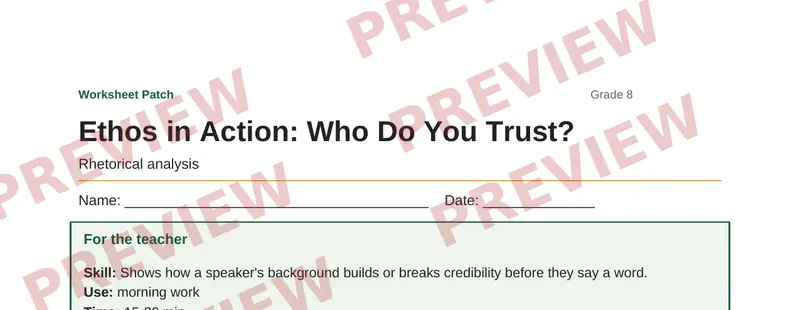
Grade 8Reading & Writing
Ethos in Action: Who Do You Trust?
Rhetorical analysis
$1.99
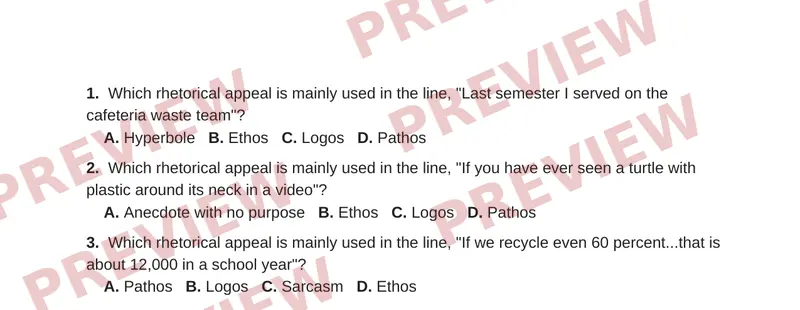
Grade 8Reading & Writing
Ethos, Pathos, Logos: Name the Appeal
Rhetorical analysis
$1.99
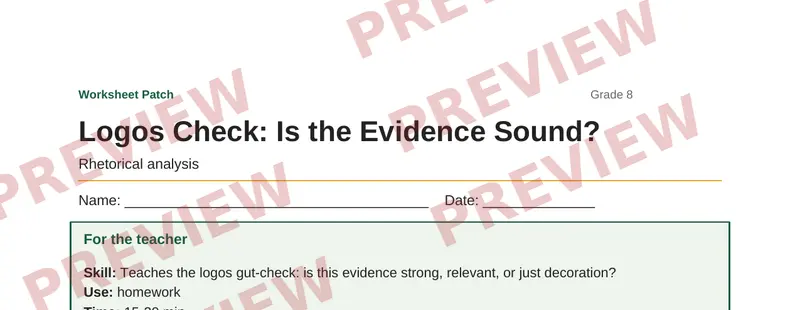
Grade 8Reading & Writing
Logos Check: Is the Evidence Sound?
Rhetorical analysis
$1.99
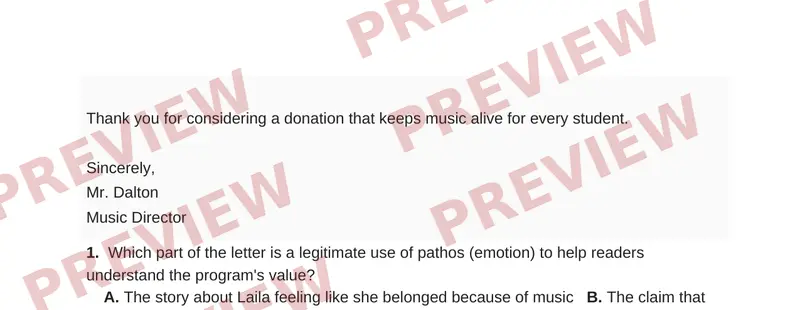
Grade 8Reading & Writing
Pathos or Manipulation? Drawing the Line
Rhetorical analysis
$1.99
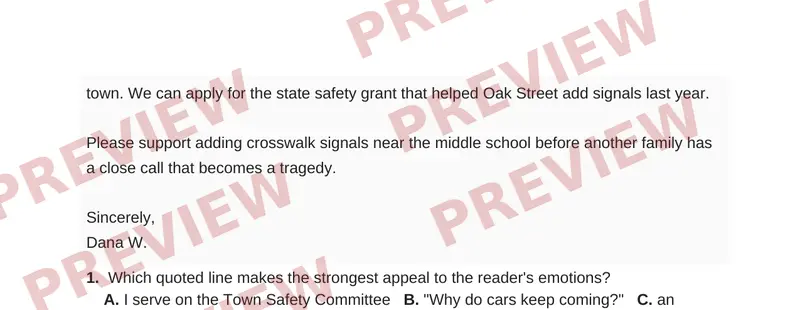
Grade 8Reading & Writing
Rhetorical Analysis: A Letter to the Editor
Rhetorical analysis
$1.99
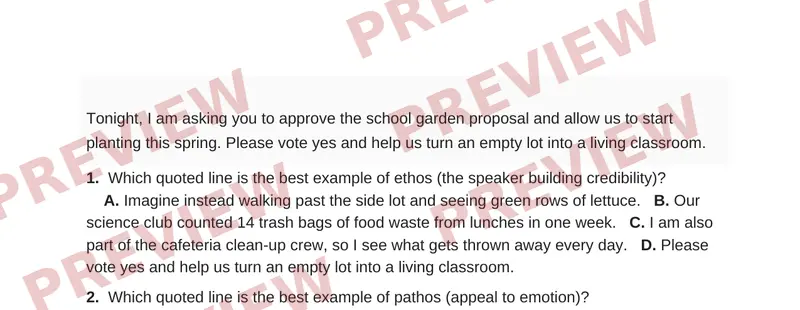
Grade 8Reading & Writing
Rhetorical Analysis: A Speech for the School Garden
Rhetorical analysis
$1.99
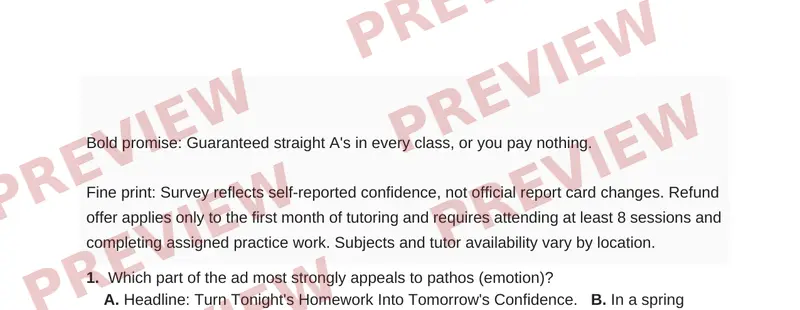
Grade 8Reading & Writing
Rhetorical Analysis: Reading an Ad Closely
Rhetorical analysis
$1.99
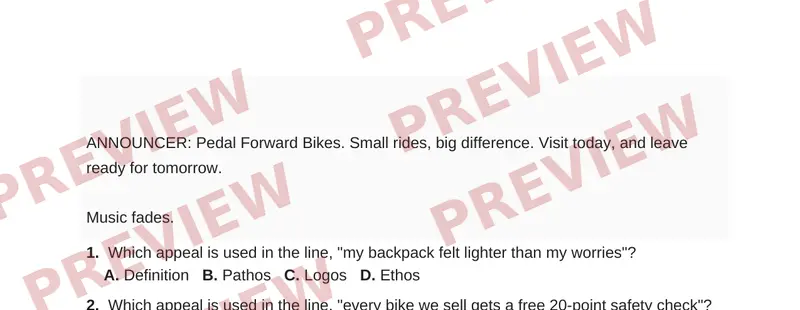
Grade 8Reading & Writing
Spotting Appeals in Short Passages
Rhetorical analysis
$1.99
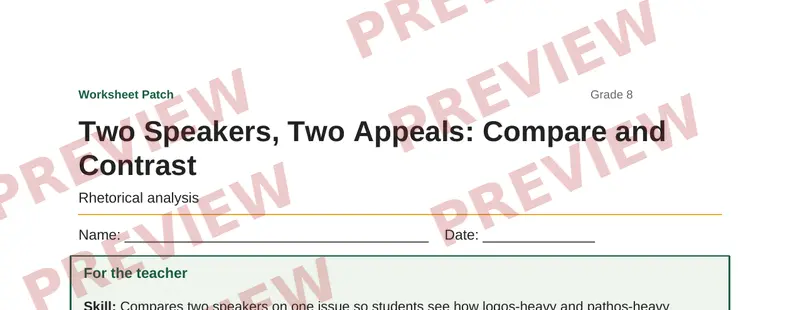
Grade 8Reading & Writing
Two Speakers, Two Appeals: Compare and Contrast
Rhetorical analysis
$1.99