
Home › Topics › Multiplication Worksheets
Multiplication worksheets
Multiplication worksheets from first introduction through fact mastery — equal groups, facts through 10×10, multi-digit multiplication, and word problems. Free and paid printable PDFs with answer keys.
How to teach multiplication
Multiplication facts are the gateway skill of upper elementary math. Once kids know their facts cold, multi-digit multiplication, division, fractions, and even algebra get dramatically easier — because the working memory that used to go into “what’s 7 × 8?” is free for the actual problem. The goal is automaticity: answers in under three seconds, without counting on fingers.
The order that works: start with the concept — multiplication as equal groups and arrays — before drilling facts. Then learn facts in a smart sequence: 2s and 5s (skip-counting kids already know), 10s, then 3s and 4s, then the hard ones (6×6 through 9×9) last, using strategies like doubling and breaking apart. The worksheets below follow this progression from introduction through mastery.
For practice that sticks, mix short daily drills with games and puzzles. Time the drill but keep it low-stakes — the timer is a measuring tool, not a threat. And always pair new facts with review of old ones; multiplication facts fade fast without spaced repetition.
Multiplication Worksheets
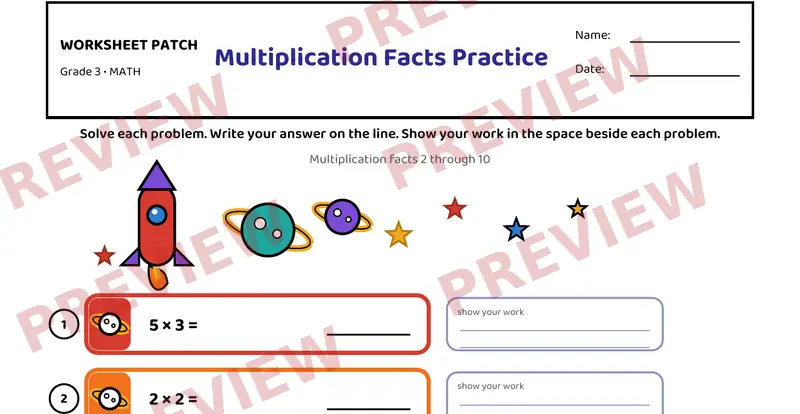
Multiplication Facts Practice

Multiplication and Division Fact Families
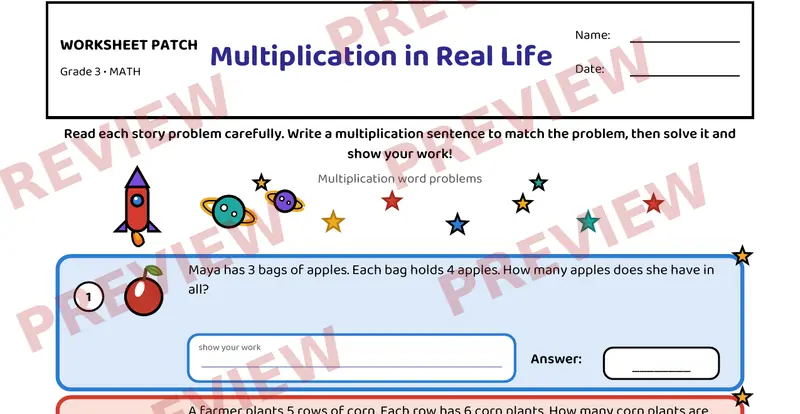
Multiplication in Real Life

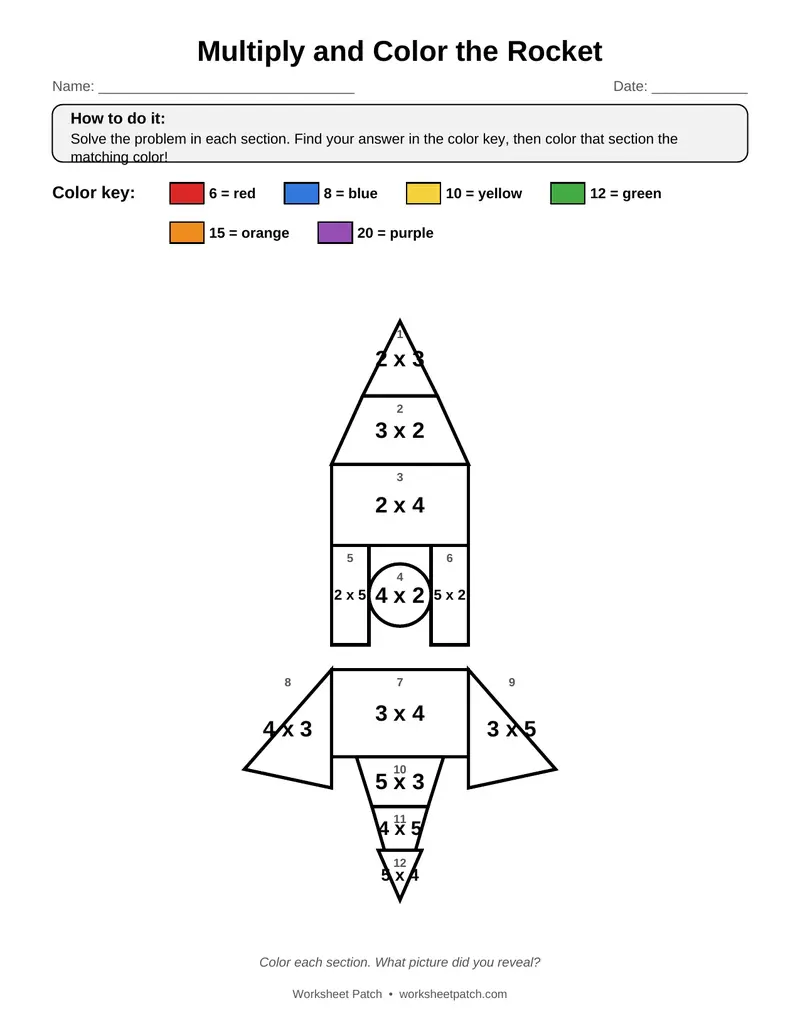
Pumpkin Patch Multiplication
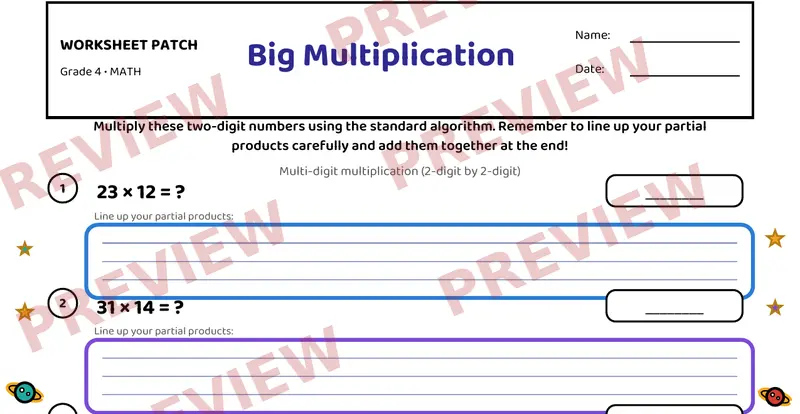
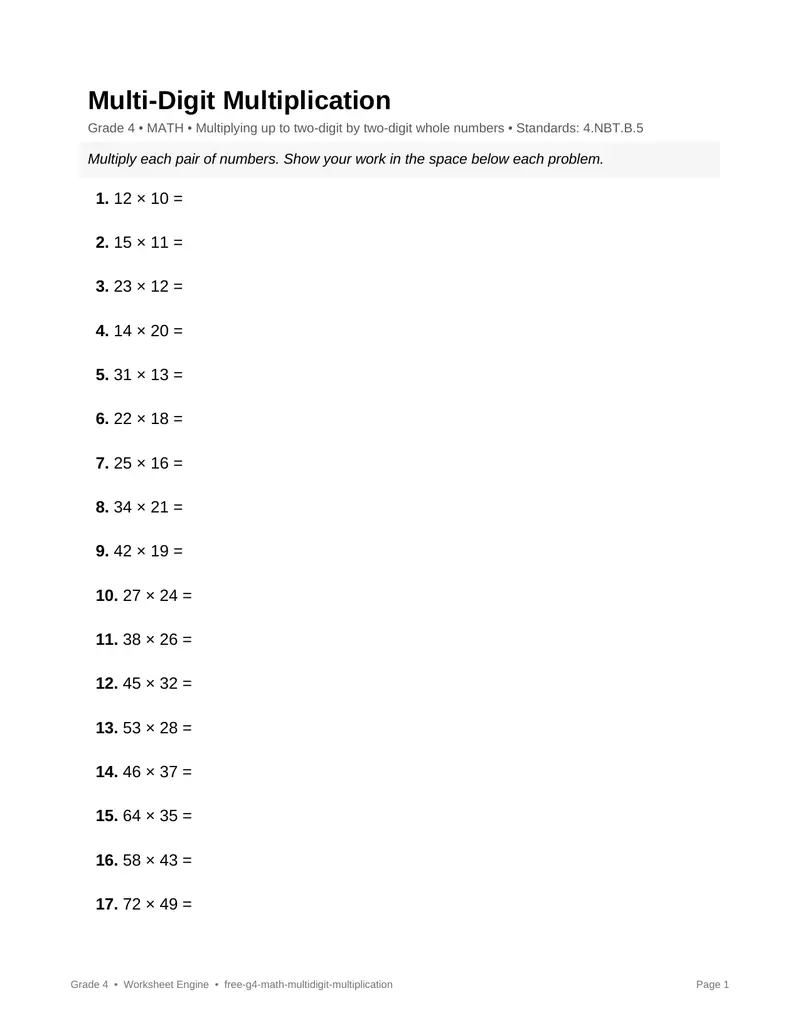
Big Multiplication
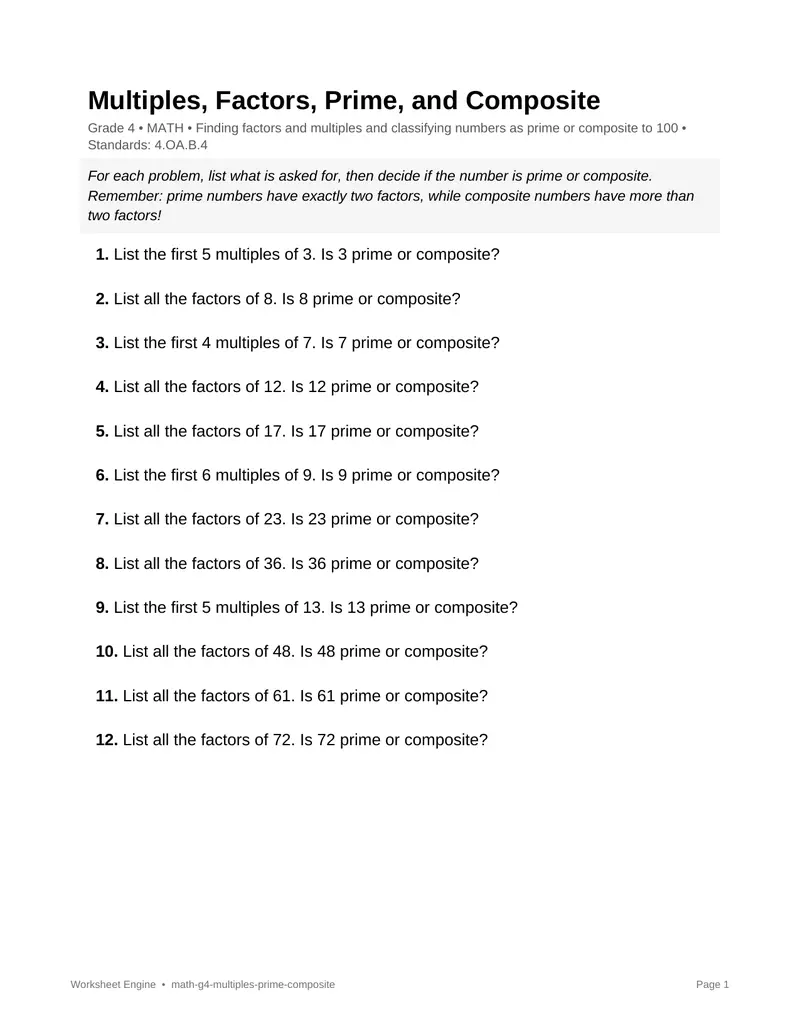
Multiples, Factors, Prime, and Composite

Multiply a Fraction by a Whole Number
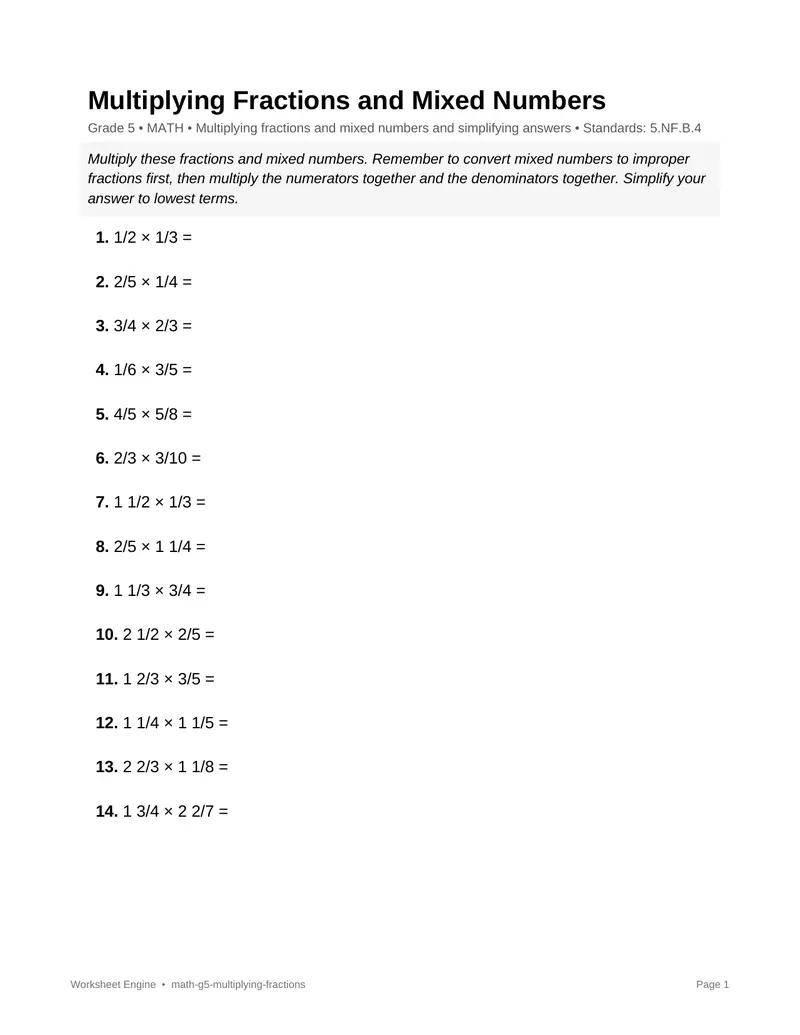
Multiplying Fractions and Mixed Numbers
Free worksheets
Start here — no purchase needed.
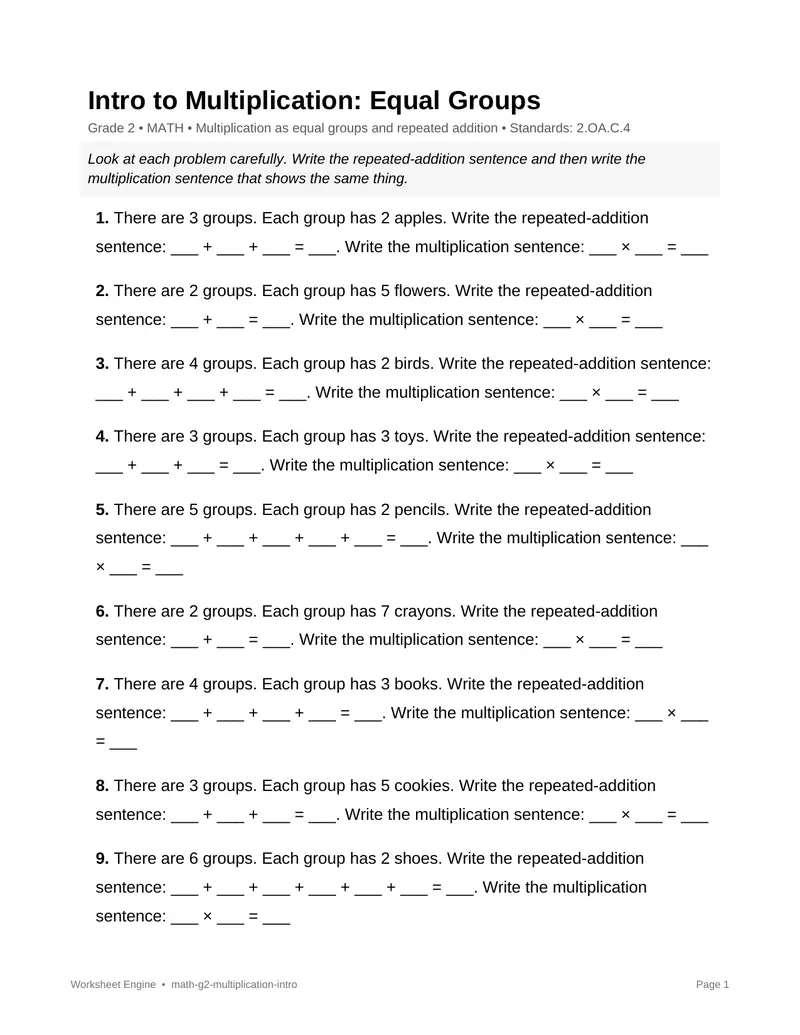
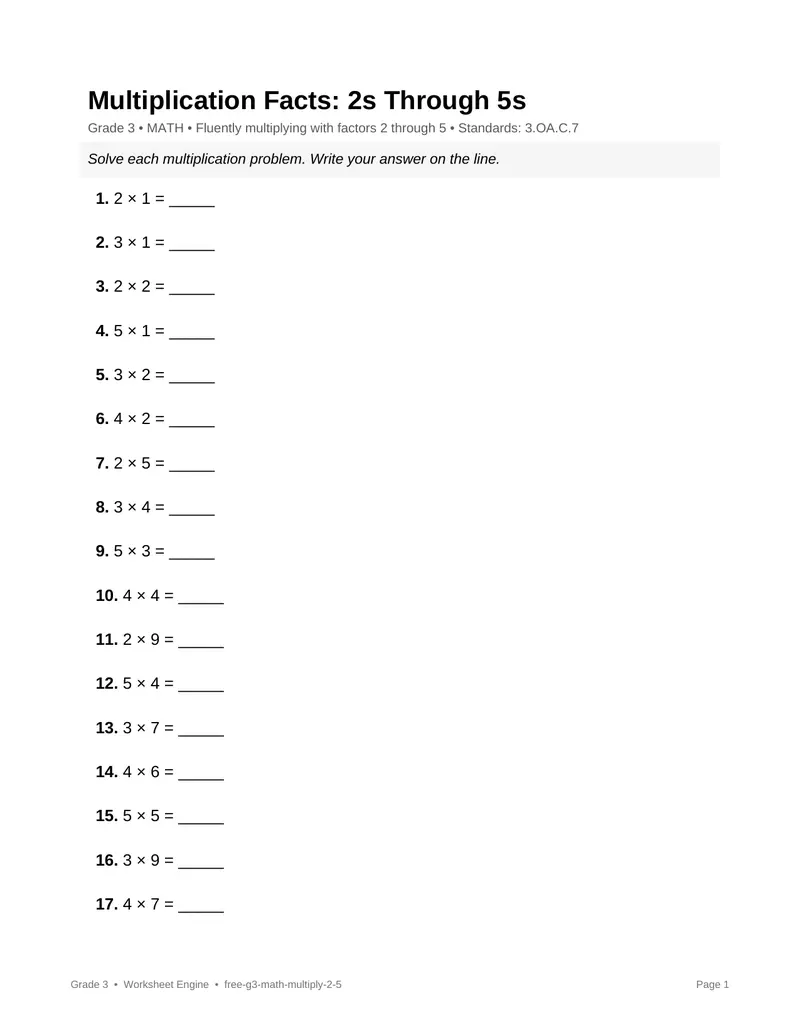
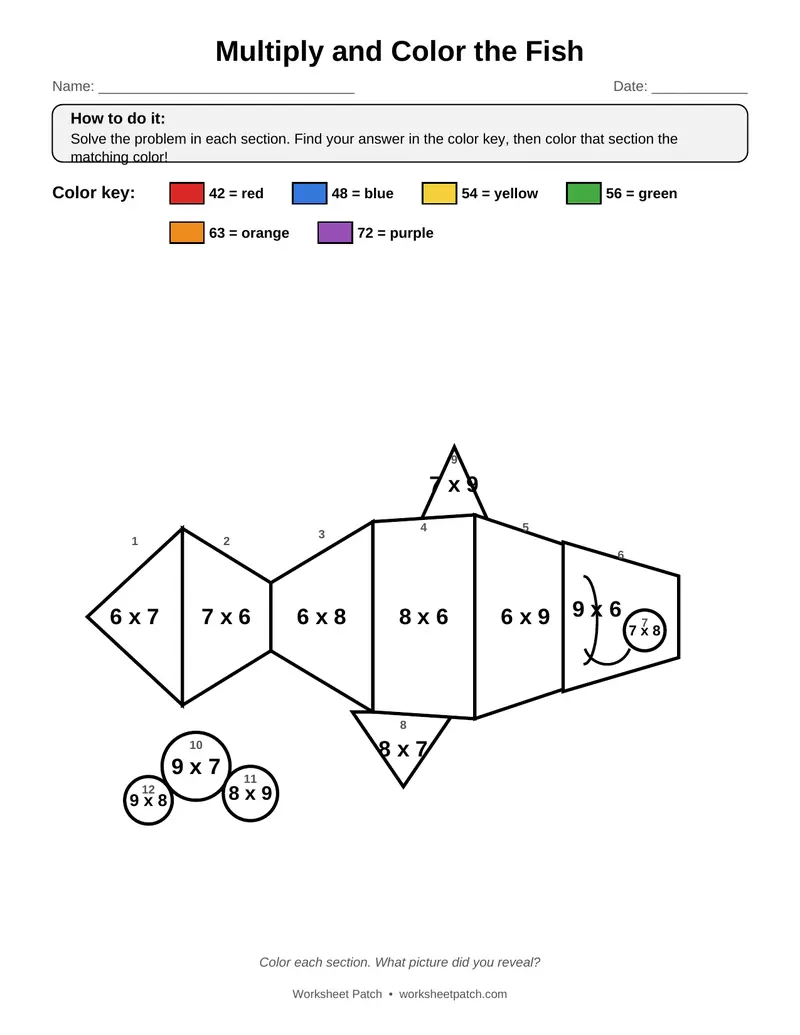
Ready-made bundles
Prefer a done-for-you set? These bundles cover the topic across a full week:
Multiplication Worksheets FAQ
When should kids memorize multiplication facts?
Most curricula introduce multiplication in 2nd grade (as equal groups) and expect fluency with facts through 10 × 10 by the end of 3rd grade. If your 4th or 5th grader still counts on fingers, it’s worth going back — weak facts slow down everything that comes after.
What is the best order to learn multiplication facts?
0s, 1s, 2s, 5s, and 10s first (patterns and skip-counting), then 3s and 4s, then 6s, 7s, 8s, and 9s last. Teach strategies for the hard ones — doubling for 4s and 8s, “one group less” for 9s — rather than pure rote memorization.
How do multiplication and division connect?
They’re inverse operations — every multiplication fact is a division fact in disguise (if 6 × 7 = 42, then 42 ÷ 7 = 6). Learning them as fact families together cements both and makes division dramatically easier.
My child knows the facts but is slow. What helps?
Speed comes from retrieval practice, not more teaching. Short timed drills (1–2 minutes), flashcards with spaced repetition, and games like our 60-second Math Facts Race build automaticity. Keep sessions short and daily.