
Home › Topics › Fractions Worksheets
Fractions worksheets
Fractions worksheets from parts of a whole through adding, comparing, and dividing fractions — printable PDFs with answer keys for grades 3–5, free and paid.
How to teach fractions
Fractions are where many kids first hit a wall in math — and it’s no mystery why. After years of whole numbers, they’re suddenly told that 1/4 is smaller than 1/3 even though 4 is bigger than 3. The fix is to slow down and build the concept visually before touching procedures: fold paper, shade shapes, and walk number lines until “the bottom number tells how many pieces, the top tells how many you have” feels obvious.
The progression: start with identifying fractions of shapes (parts of a whole), then equivalent fractions (why 1/2 = 2/4 = 3/6), then comparing and ordering, then adding and subtracting with like denominators, and finally unlike denominators — finding common denominators is the summit of elementary fractions. Each stage below has dedicated worksheets with answer keys.
Two things that make fractions click: always connect the symbols to a picture, and use food. Pizza, chocolate bars, and measuring cups are fraction manipulatives kids actually care about. When a worksheet asks for 3/4 + 1/4, ask “three quarters of a pizza plus one more — how much pizza?” first.
Fractions Worksheets
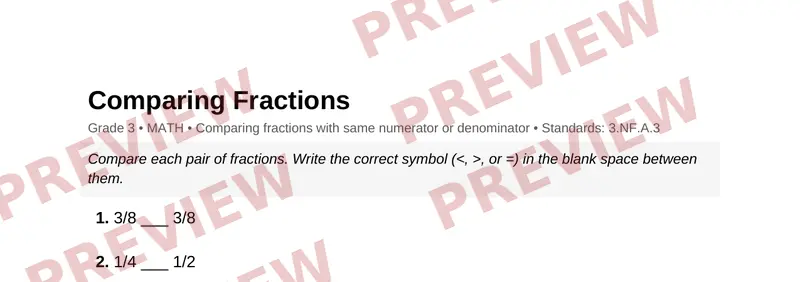
Comparing Fractions

Equivalent Fraction Models
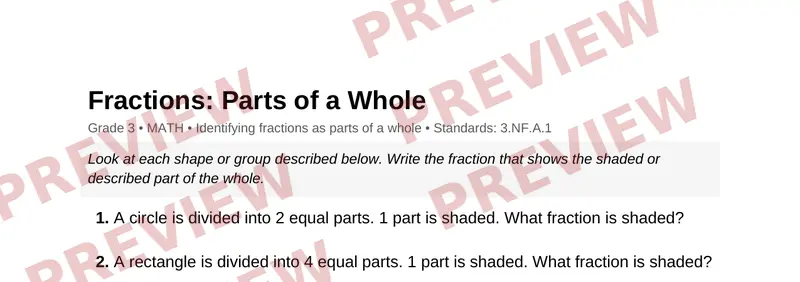
Fractions: Parts of a Whole

Witch's Brew Fractions
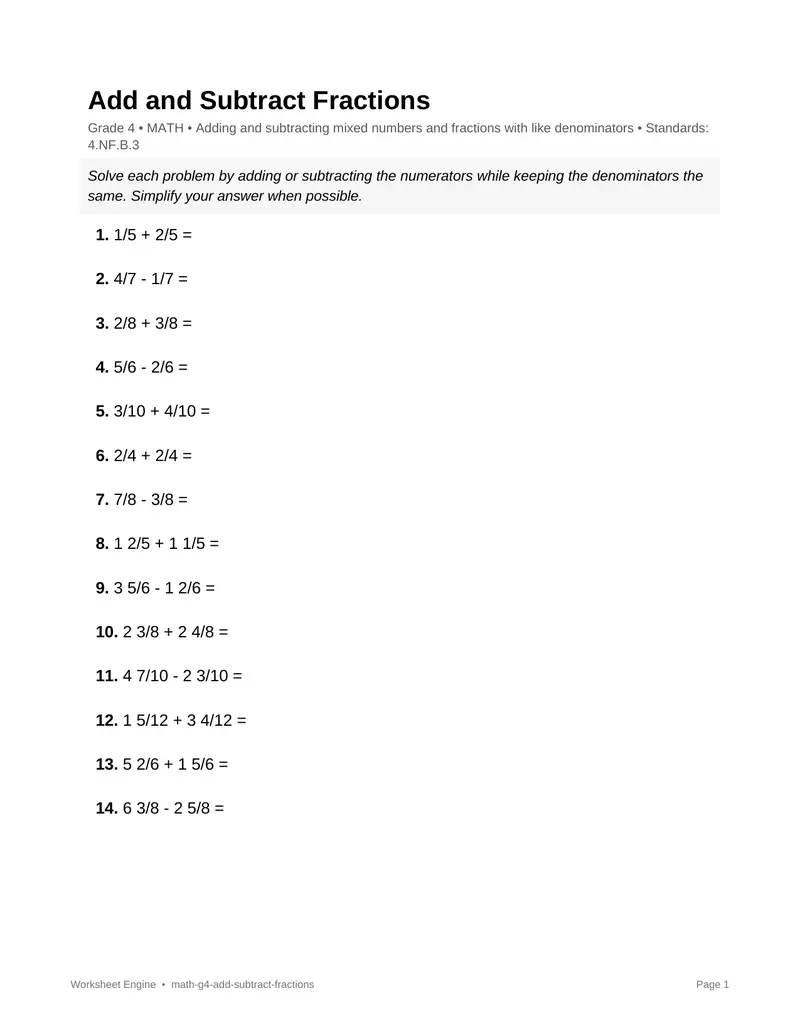
Add and Subtract Fractions
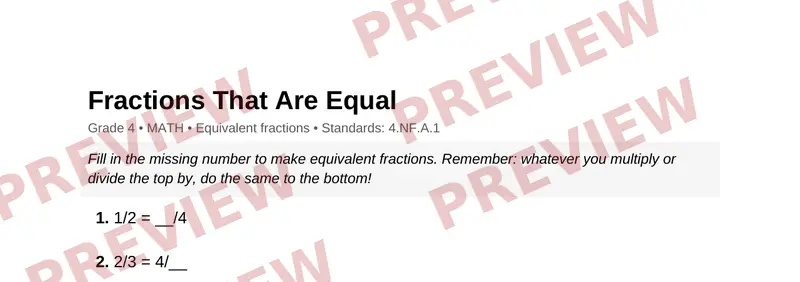
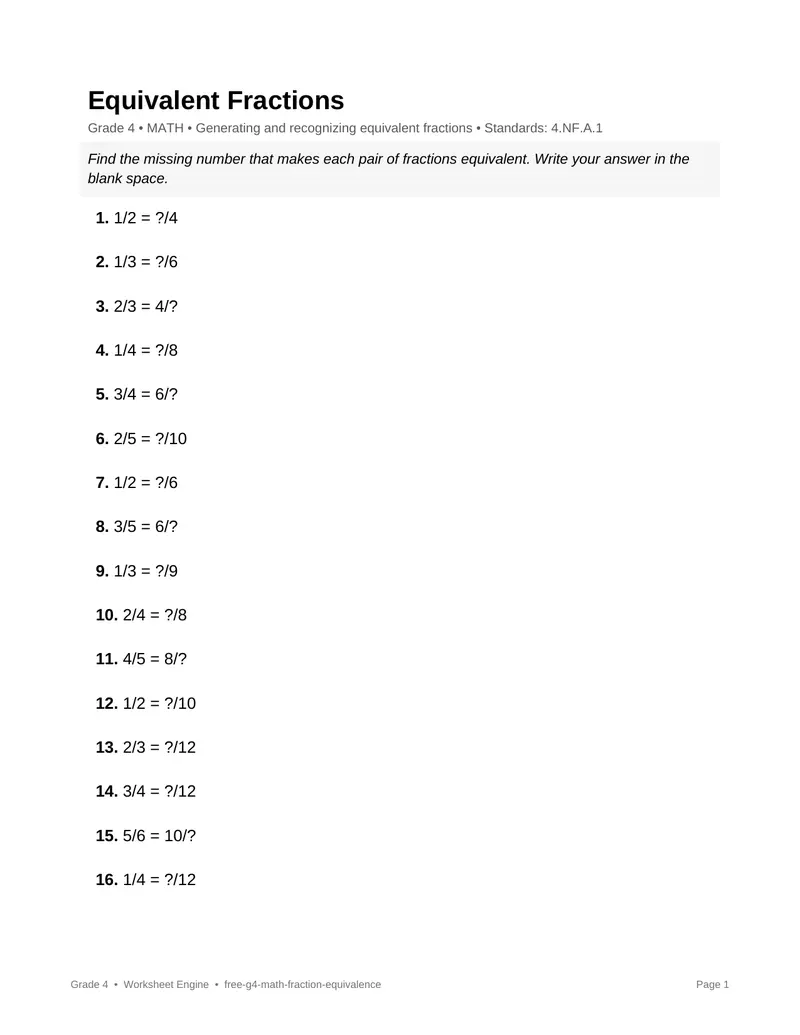
Fractions That Are Equal

Fractions on the Boardwalk
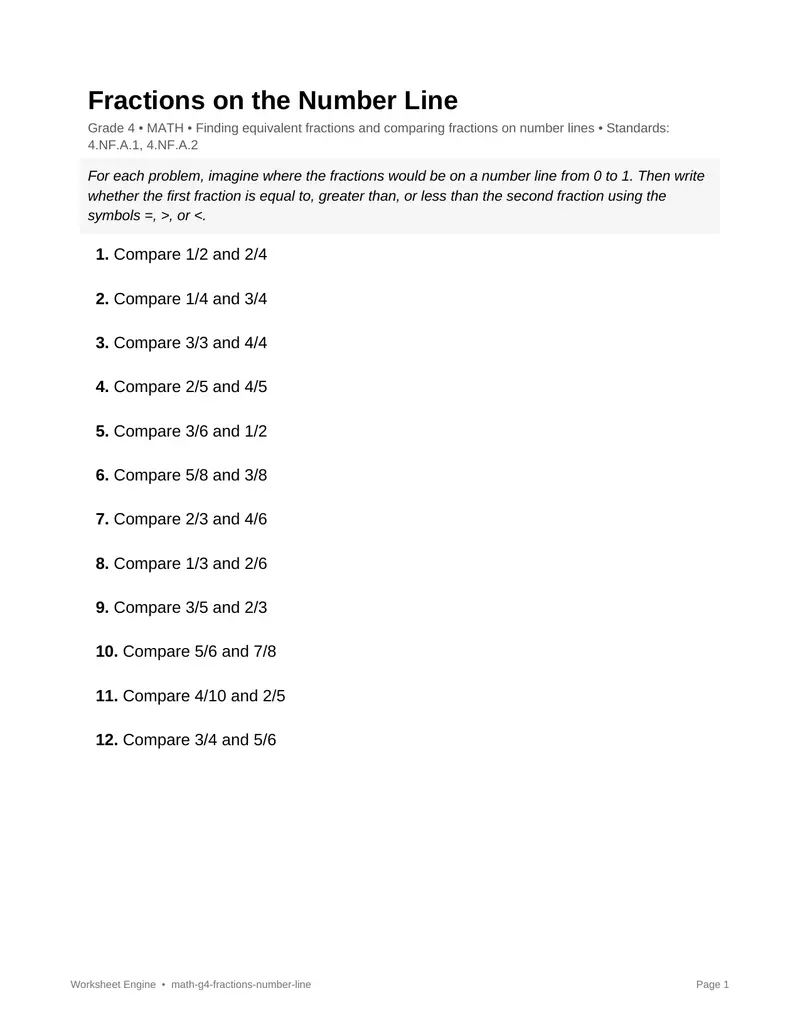
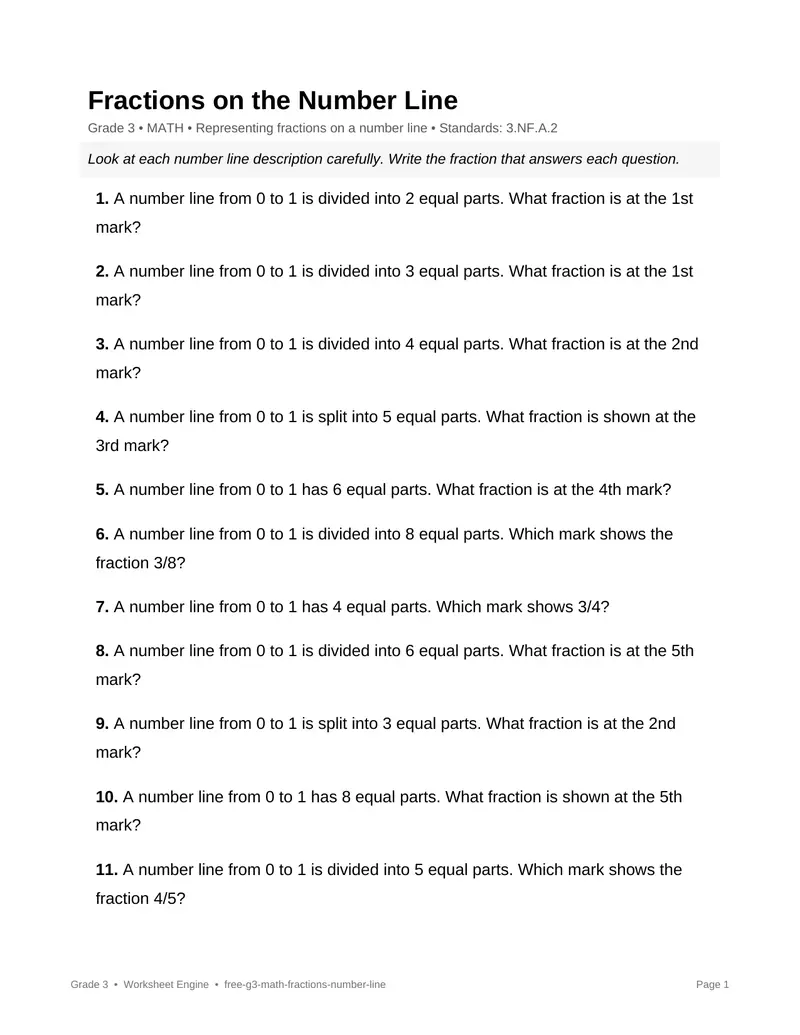
Fractions on the Number Line

Multiply a Fraction by a Whole Number
Adding Fractions with Like Denominators
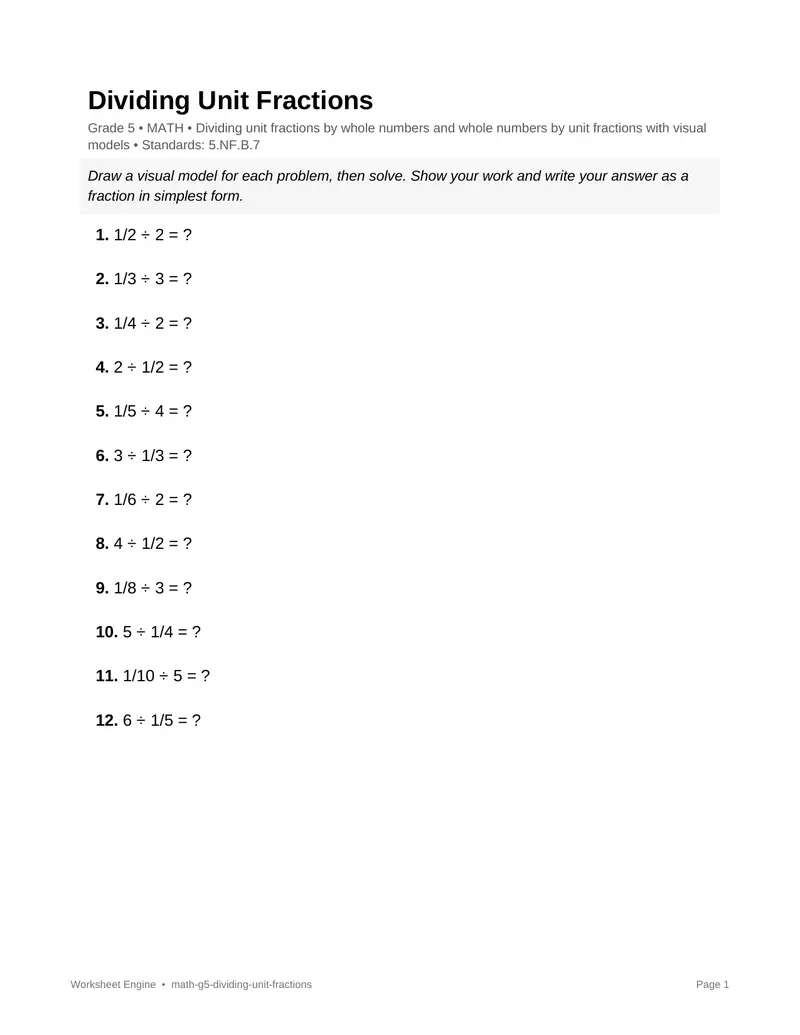
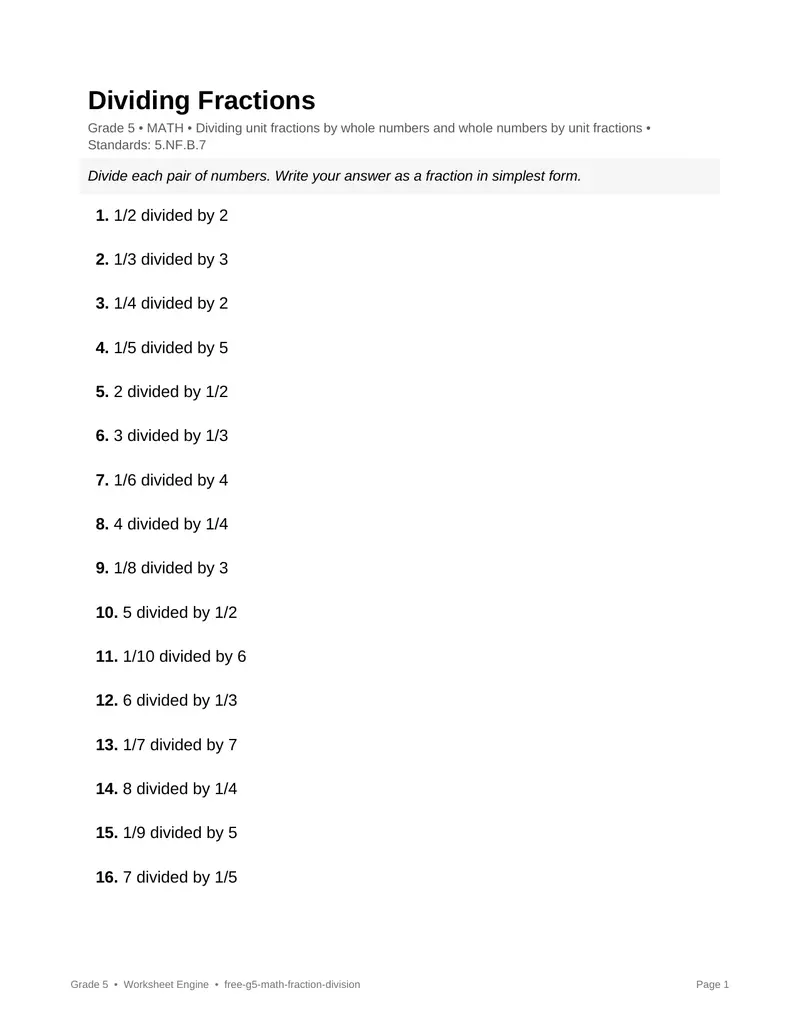
Dividing Unit Fractions
Fractions: Unlike Denominators
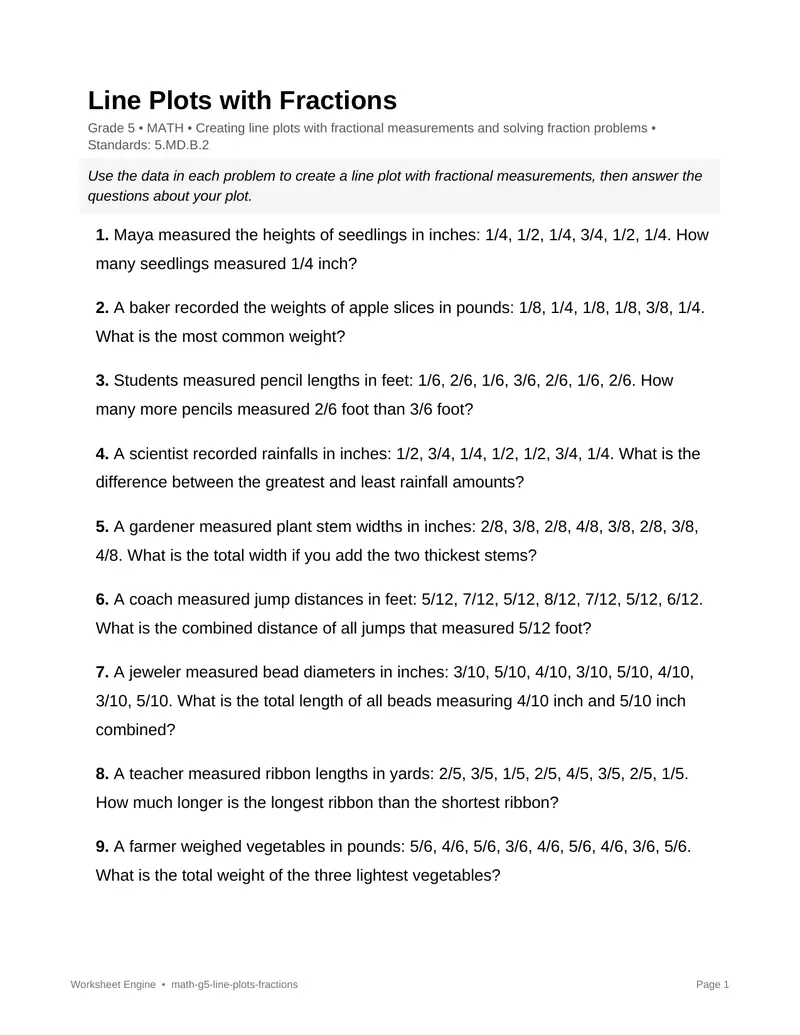
Line Plots with Fractions
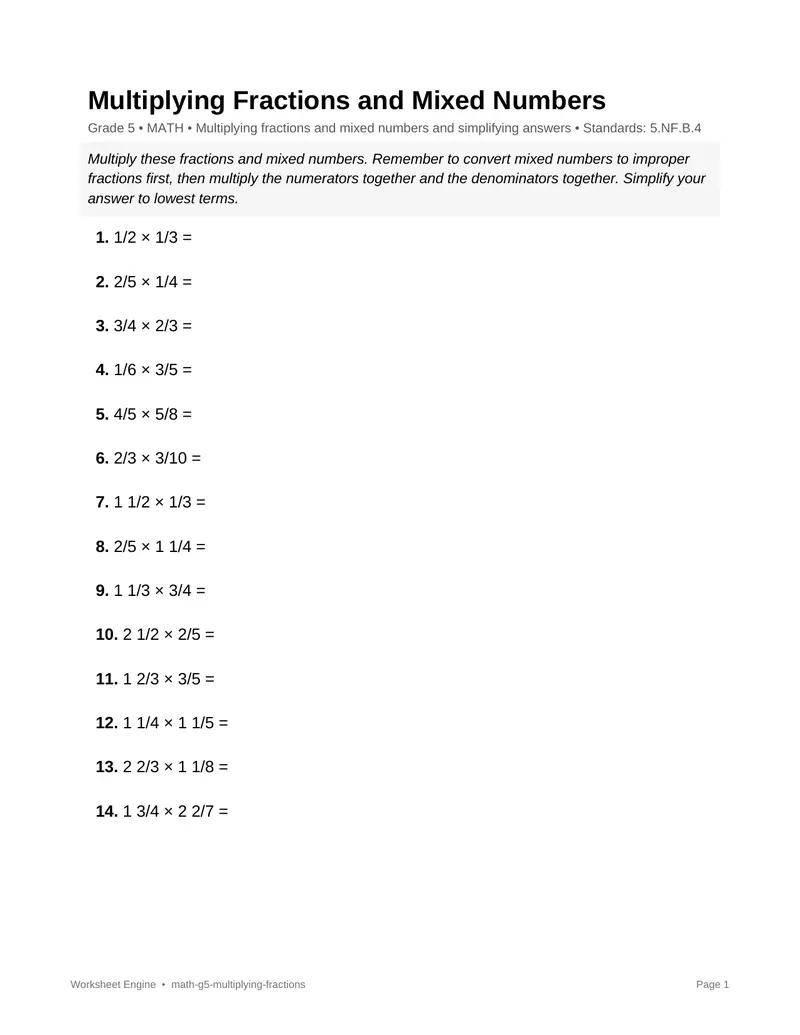
Multiplying Fractions and Mixed Numbers
Free worksheets
Start here — no purchase needed.
Ready-made bundles
Prefer a done-for-you set? These bundles cover the topic across a full week:
Fractions Worksheets FAQ
Why are fractions so hard for kids?
Fractions break the whole-number rules kids just spent years learning — a bigger bottom number means smaller pieces, and you can’t just add the tops and bottoms. The cure is visual: number lines, fraction bars, and area models make the new rules concrete before they become abstract.
What order should fraction topics go in?
Identify fractions of shapes, then equivalent fractions, then compare and order, then add and subtract like denominators, then unlike denominators, then multiply and divide fractions. Skipping ahead to procedures without the visual foundation is the number-one cause of fraction struggles.
What is the difference between like and unlike denominators?
Like denominators means the fractions are cut into same-size pieces (thirds and thirds), so you can add the tops directly. Unlike denominators means different-size pieces — you have to convert to equivalent fractions with a common denominator first.
How do you explain equivalent fractions simply?
Multiply (or divide) the top and bottom by the same number — you’re cutting each piece into smaller pieces, but the total amount doesn’t change. Show it: shade 1/2 of a rectangle, then cut every piece in half to see it’s 2/4. Same shaded area.