
Home › Topics › Division Worksheets
Division worksheets
Division worksheets from equal sharing through division facts and long division — printable PDFs with answer keys for grades 3–5, free and paid.
How to teach division
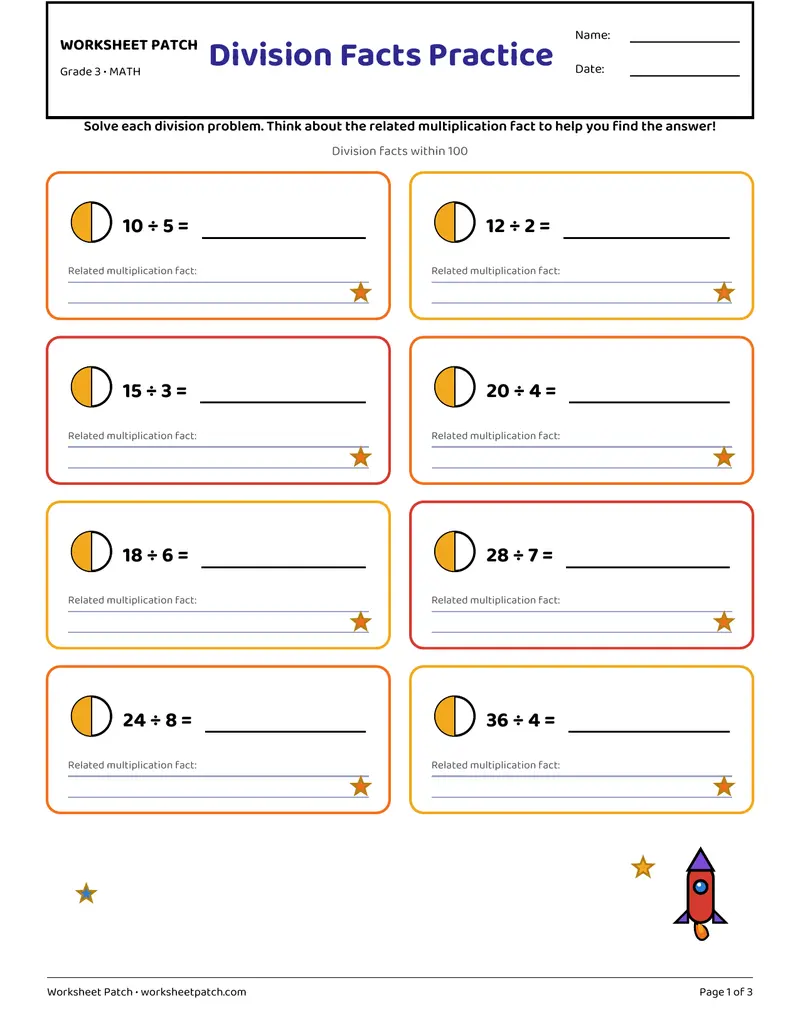
Division clicks fastest when kids see it as the flip side of multiplication. If they know 6 × 7 = 42, then 42 ÷ 6 = 7 is already in their head — they just don’t know it yet. That’s why the strongest division practice always runs alongside multiplication review, and why our fact-family worksheets teach the two operations as a pair.
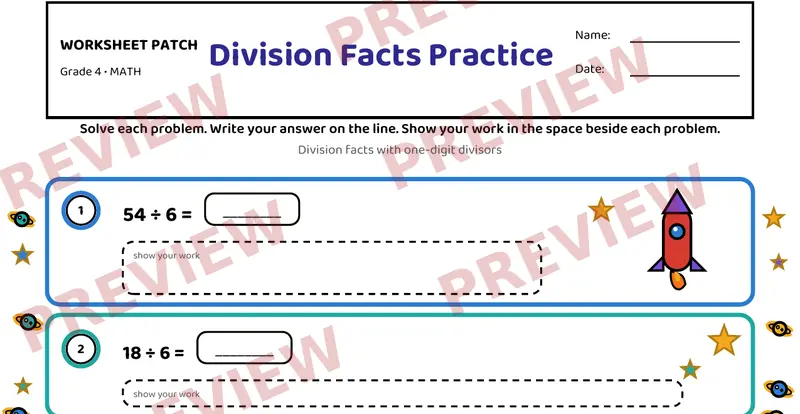
Start with the concept — division as equal sharing (“12 cookies, 3 friends, how many each?”) and as equal groups. Then build fluency with basic division facts, and only then move to long division, which is really just organized repeated subtraction. Rushing to long division before facts are automatic is the most common mistake.
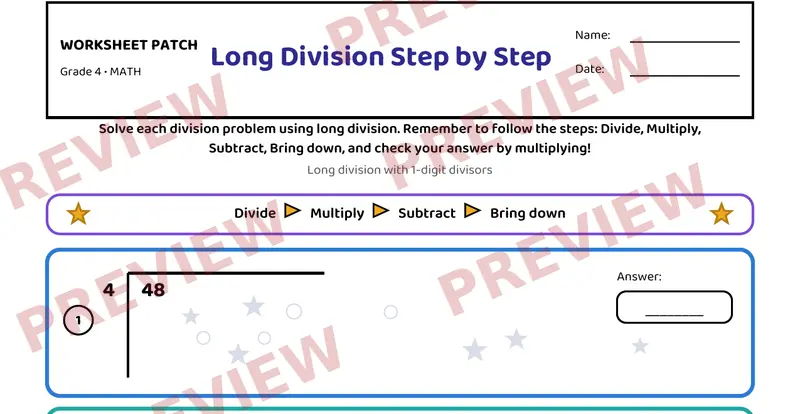
For long division, teach the steps as a chant: Divide, Multiply, Subtract, Bring down. And insist on estimating first — a kid who can guess “about how big should the answer be?” will catch their own errors.
Division Worksheets


Free worksheets
Start here — no purchase needed.
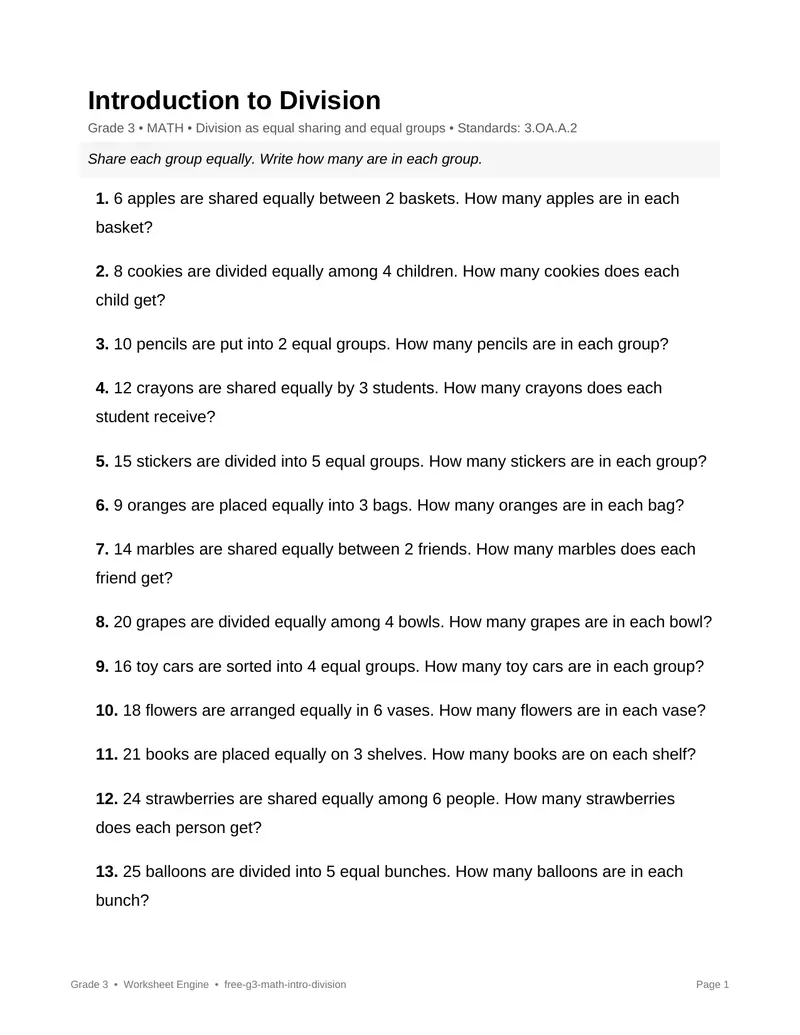
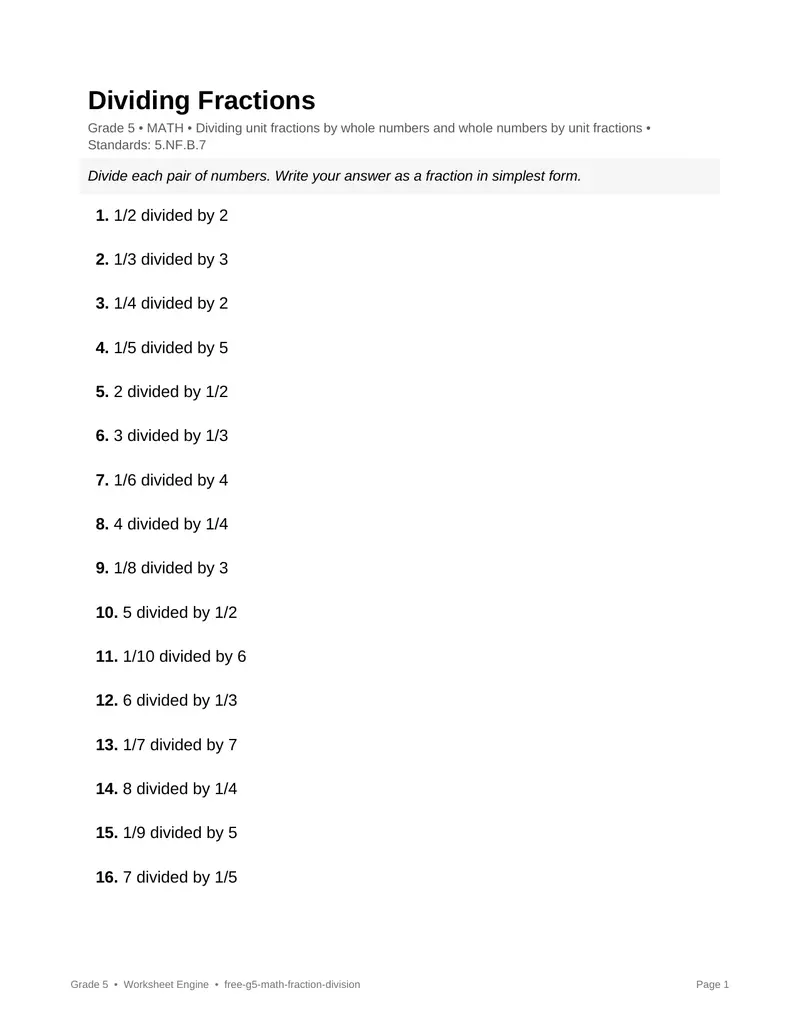
Ready-made bundles
Prefer a done-for-you set? These bundles cover the topic across a full week:
Division Worksheets FAQ
Should kids learn division before or after multiplication?
After — or rather, alongside. Division is the inverse of multiplication, so every minute spent on multiplication facts pays double dividends in division. Our fact-family worksheets deliberately practice both directions together.
Why is long division so hard?
Long division stacks four skills — divide, multiply, subtract, bring down — in a loop, and one weak link breaks the chain. Make sure subtraction and multiplication facts are solid first, then teach the steps one at a time with plenty of guided practice.
What are fact families?
A fact family is the set of related multiplication and division facts from the same three numbers — 3, 4, 12 gives 3 × 4 = 12, 4 × 3 = 12, 12 ÷ 3 = 4, 12 ÷ 4 = 3. Learning them as a family instead of isolated facts builds the inverse relationship into memory.
How do you divide fractions?
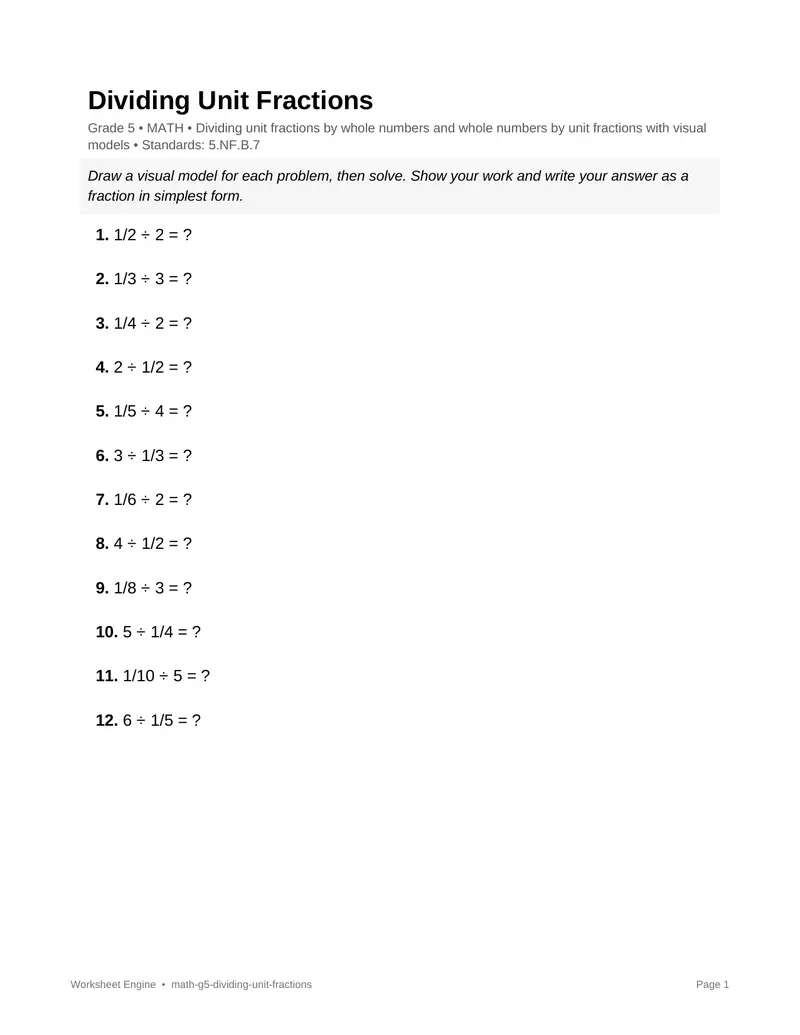
“Keep, change, flip” — keep the first fraction, change division to multiplication, flip the second fraction, then multiply. It works because dividing by a fraction is the same as multiplying by its reciprocal.